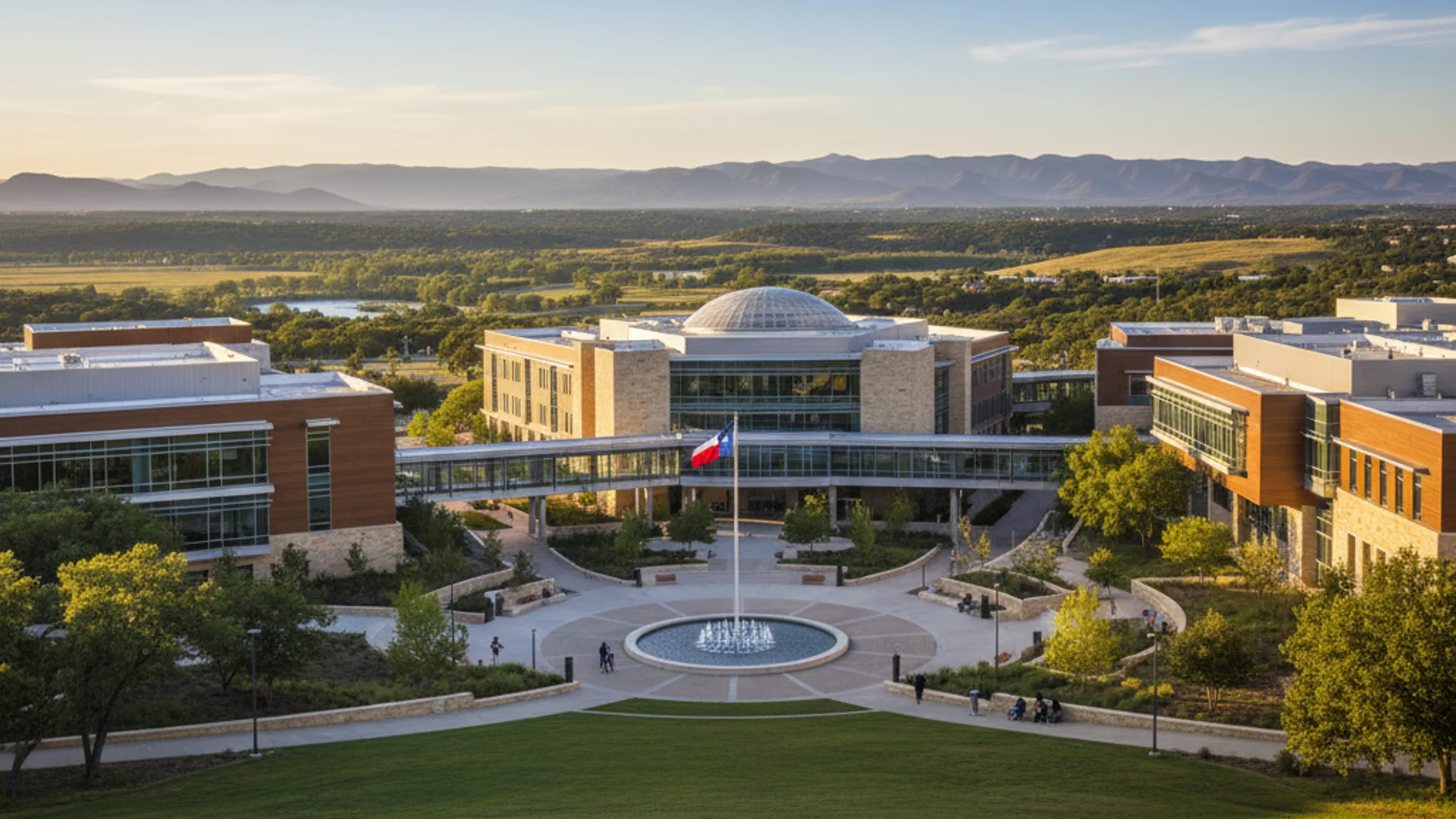
Top 3 AI Doctoral Programs 2025
Stanford University
World-leading AI research with $45M annual funding and partnerships with Google, OpenAI, and Meta
Massachusetts Institute of Technology
CSAIL lab produces breakthrough research in machine learning, robotics, and natural language processing
Carnegie Mellon University
Dedicated ML department with specialized tracks in computer vision, NLP, and autonomous systems
- 1.Top AI PhD programs require 5-7 years to complete with average funding of $42,000 annually
- 2.Research assistantships provide full tuition coverage plus stipends at 89% of ranked programs
- 3.PhD graduates earn median starting salaries of $165,000 in industry or $85,000 in academia
- 4.Machine learning and natural language processing are the most competitive specialization areas
- 5.76% of AI PhD graduates enter industry roles at tech companies, while 24% pursue academic careers
Based on 42 programs from Academic Analytics Research Intelligence, NSF Graduate Research Fellowship data, and institutional reports
H-index, citations, and publication volume in top AI venues
Award recipients, industry recognition, and research grants
Percentage of students with full funding and average stipend amounts
Corporate collaborations and internship placement rates
Job placement rates and starting salary data
Computing infrastructure, lab facilities, and equipment access
Complete AI Doctoral Program Rankings 2025
| Program | |||||||
|---|---|---|---|---|---|---|---|
| 1 | Stanford University | Stanford, CA | PhD Computer Science (AI) | 98.5 | 9500% | 5.1 years | 9700% |
| 2 | Massachusetts Institute of Technology | Cambridge, MA | PhD EECS | 97.8 | 9400% | 5.3 years | 9600% |
| 3 | Carnegie Mellon University | Pittsburgh, PA | PhD Machine Learning | 96.9 | 9200% | 5.0 years | 9500% |
| 4 | University of California, Berkeley | Berkeley, CA | PhD Computer Science | 95.7 | 9000% | 5.4 years | 9400% |
| 5 | California Institute of Technology | Pasadena, CA | PhD Computing + Mathematical Sciences | 94.8 | 9300% | 4.9 years | 9200% |
| 6 | University of Washington | Seattle, WA | PhD Computer Science & Engineering | 93.9 | 8800% | 5.2 years | 9100% |
| 7 | Georgia Institute of Technology | Atlanta, GA | PhD Computer Science | 92.6 | 8500% | 5.1 years | 8900% |
| 8 | University of Illinois Urbana-Champaign | Urbana, IL | PhD Computer Science | 91.8 | 8700% | 5.3 years | 8800% |
| 9 | Cornell University | Ithaca, NY | PhD Computer Science | 90.9 | 8900% | 5.2 years | 9000% |
| 10 | University of Texas at Austin | Austin, TX | PhD Computer Science | 89.7 | 8200% | 5.4 years | 8600% |
AI Doctoral Program Admission Requirements
Admission to top AI doctoral programs is highly competitive, with acceptance rates averaging 8-12% at leading institutions. Most programs require a master's degree in computer science, mathematics, or related field, though exceptional candidates with strong undergraduate backgrounds may be admitted directly.
Academic Prerequisites: Successful applicants typically demonstrate mastery of linear algebra, probability and statistics, algorithms and data structures, and programming proficiency in Python, C++, or similar languages. Many programs require completion of machine learning coursework or equivalent experience through projects or research.
Research Experience: Publications in AI/ML conferences (ICML, NeurIPS, ICLR) or journals significantly strengthen applications. Research assistantship experience, independent projects showcasing technical depth, and contributions to open-source AI frameworks demonstrate research potential to admissions committees.
Standardized Tests: While some programs have moved away from GRE requirements post-2020, quantitative scores above the 85th percentile remain advantageous for competitive programs. International students must demonstrate English proficiency through TOEFL (minimum 100) or IELTS (minimum 7.0) scores.
Application Materials: Strong personal statements should articulate specific research interests, demonstrate knowledge of faculty work, and outline career goals. Three letters of recommendation from research supervisors or professors who can speak to technical abilities and research potential are essential. A well-documented portfolio of coding projects, preferably on platforms like GitHub, showcases practical skills.
AI Research Specializations and Focus Areas
AI doctoral programs offer diverse specialization tracks aligned with cutting-edge research areas. Machine learning remains the most popular concentration, chosen by 34% of AI PhD students, followed by natural language processing (22%) and computer vision (18%).
Machine Learning and Deep Learning: Core areas include neural network architectures, optimization algorithms, and theoretical foundations of learning. Research opportunities span supervised, unsupervised, and reinforcement learning paradigms. Students often work on transformer models, graph neural networks, and federated learning systems.
Natural Language Processing: NLP research covers language models, machine translation, sentiment analysis, and conversational AI. With the rise of large language models, students explore prompt engineering, fine-tuning techniques, and multilingual processing. Ethics and bias in language models represent emerging research frontiers.
Computer Vision: Visual recognition, object detection, and image generation constitute primary research areas. Students develop algorithms for autonomous vehicles, medical imaging, and augmented reality applications. Recent focus areas include few-shot learning, domain adaptation, and explainable computer vision.
Robotics and Autonomous Systems: Intersection of AI with robotics covers motion planning, sensor fusion, and human-robot interaction. Students design algorithms for manipulation, navigation, and collaborative robotics. Applications span manufacturing automation, service robots, and space exploration systems.
AI Safety and Ethics: Emerging specialization addressing alignment, interpretability, and fairness in AI systems. Research includes adversarial robustness, privacy-preserving machine learning, and algorithmic bias mitigation. This area is increasingly important for students interested in AI regulation and policy careers.
Source: National Science Foundation Survey of Earned Doctorates 2024
Doctoral Program Funding and Financial Support
AI doctoral programs typically provide comprehensive financial support through research assistantships, teaching assistantships, and fellowships. 89% of students at top-ranked programs receive full funding covering tuition and providing annual stipends averaging $42,000.
Research Assistantships: Most common funding mechanism, providing $35,000-$55,000 annually plus full tuition coverage. Students work 20 hours per week on faculty research projects, gaining valuable experience while contributing to cutting-edge investigations. RA positions often lead to publication opportunities and conference presentations.
Teaching Assistantships: Supplement research funding and develop pedagogical skills. TA responsibilities include leading discussion sections, grading assignments, and holding office hours. Compensation ranges from $25,000-$40,000 annually, with additional teaching experience valuable for academic career preparation.
External Fellowships: Prestigious awards like NSF Graduate Research Fellowship ($37,000 stipend), DoD SMART Scholarship, and corporate fellowships from Google, Microsoft, and Facebook provide enhanced funding and recognition. These fellowships offer research flexibility and strengthen academic credentials.
Industry Partnerships: Many programs offer internship opportunities at tech companies, providing additional income and real-world experience. Summer internships at Google, OpenAI, and similar organizations typically pay $8,000-$12,000 monthly, while maintaining academic progress toward degree completion.
Career Paths
AI/ML Engineer
SOC 15-1299Design and implement machine learning systems for tech companies and startups
Data Scientist
SOC 15-2051Apply statistical methods and machine learning to extract insights from complex datasets
Research Scientist
Conduct fundamental AI research at technology companies, labs, or academic institutions
University Professor
Teach AI courses and conduct research at universities and colleges
AI Product Manager
Guide development of AI-powered products and features at technology companies
AI Consultant
Advise organizations on AI strategy and implementation across industries
Application Timeline and Deadlines
AI doctoral program applications follow strict deadlines, with most programs requiring submission between December 1-15 for fall enrollment. Early preparation is essential given the competitive nature of admissions and complexity of application materials.
18 Months Before: Begin researching programs and identifying potential research advisors. Start building relationships with faculty who can provide strong recommendation letters. Gain research experience through undergraduate research programs, internships, or independent projects.
12 Months Before: Take standardized tests (GRE, TOEFL/IELTS if international). Begin drafting personal statements and reaching out to potential advisors. Attend conferences like ICML or NeurIPS to network and understand current research directions.
6 Months Before: Finalize school list and begin application preparation. Request transcripts from all institutions attended. Complete applications for external fellowships like NSF GRFP (October deadline). Polish research portfolio and coding projects.
3 Months Before: Submit fellowship applications and finalize personal statements. Request recommendation letters with adequate notice. Complete application forms and prepare for potential interviews at select programs.
Application Period (Dec-Jan): Submit applications by deadlines, typically December 1-15. Monitor application status and respond promptly to interview invitations. Some programs conduct virtual interviews, while others invite candidates for campus visits.
Stanford University
Stanford, CA • University
Program Highlights
- • $45M annual research funding across AI initiatives
- • Average placement rate of 97% within 6 months of graduation
- • Alumni include founders of major AI companies and research leaders
Program Strengths
- World-class faculty including Fei-Fei Li, Christopher Manning, and Andrew Ng
- Stanford AI Lab (SAIL) provides access to cutting-edge research facilities
- Strong industry connections with Google, OpenAI, and other AI leaders
- Interdisciplinary collaboration with medicine, business, and policy programs
- Generous funding with 95% of students receiving full support
Why Ranked #1
Stanford leads AI research with groundbreaking work in large language models, autonomous systems, and AI safety. The program benefits from proximity to Silicon Valley and partnerships with major tech companies.
Student Reviews
"The research opportunities are unmatched, and the faculty genuinely care about your development as a researcher."
— PhD Student, 4th Year
"Having access to industry partnerships made it easy to apply research to real-world problems."
— Recent Graduate, now at Google DeepMind
| Factor | Research University | Industry-Focused Program | Interdisciplinary Program |
|---|---|---|---|
| Primary Focus | Fundamental research and theory | Applied research and commercialization | AI applications across domains |
| Faculty Background | Academic researchers | Industry veterans and academics | Experts from multiple fields |
| Funding Sources | Government grants and fellowships | Corporate partnerships | Diverse funding streams |
| Career Preparation | Academic and research positions | Industry and startup roles | Cross-sector opportunities |
| Research Timeline | Longer-term, exploratory | Shorter cycles, practical | Varies by application domain |
| Publication Venues | Top-tier academic conferences | Industry and academic venues | Domain-specific journals |
Frequently Asked Questions
Steps to Apply for AI Doctoral Programs
Research Programs and Faculty
Identify 8-12 programs with faculty conducting research in your areas of interest. Read recent papers and understand current research directions.
Build Research Experience
Participate in undergraduate research, complete independent projects, or pursue research internships to demonstrate research potential.
Prepare Application Materials
Write compelling personal statements, secure strong recommendation letters, and prepare portfolios showcasing technical skills and projects.
Apply for External Funding
Submit applications for NSF GRFP, DoD fellowships, and corporate scholarship programs to strengthen your candidacy.
Submit Applications
Complete applications by December deadlines, ensuring all materials are submitted and application fees are paid.
Prepare for Interviews
Practice presenting your research, prepare questions about programs, and be ready to discuss your research interests and career goals.
Related AI Education Resources
Data Sources and Methodology
Comprehensive data on PhD completion rates, funding, and career outcomes
Faculty productivity metrics, citation analysis, and research output data
Employment projections and salary data for AI-related occupations
Professional organization data on computing careers and education trends
Higher education enrollment and graduation data
Taylor Rupe
Full-Stack Developer (B.S. Computer Science, B.A. Psychology)
Taylor combines formal training in computer science with a background in human behavior to evaluate complex search, AI, and data-driven topics. His technical review ensures each article reflects current best practices in semantic search, AI systems, and web technology.