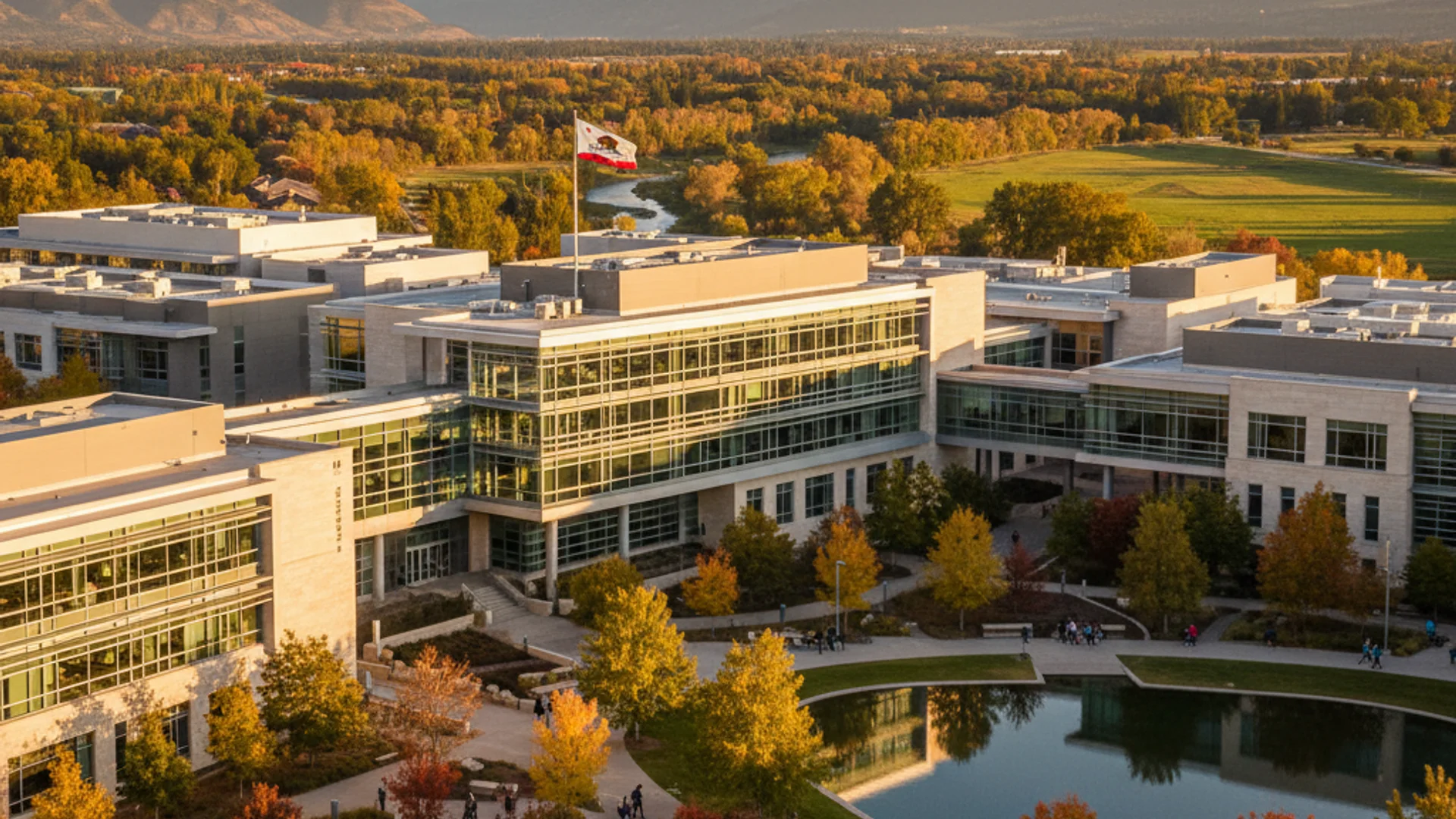
Top 3 Associate's Degree Programs in Software Engineering 2025
Bellevue College
Strong industry partnerships with Microsoft and Amazon for internships and job placement
Northern Virginia Community College
Excellent transfer agreements with George Mason and Virginia Tech engineering programs
Austin Community College
Located in tech hub with direct pathways to local startups and established companies
- 1.Associate's degrees in software engineering take 2 years and cost 60-70% less than bachelor's programs
- 2.Graduates earn median starting salaries of $52,000, with potential to reach $75,000+ with experience
- 3.Software developer jobs are projected to grow 25% from 2022-2032, much faster than average
- 4.Many programs offer stackable credentials that transfer to 4-year computer science degrees
- 5.Top employers actively recruit associate degree holders for junior developer and programmer analyst roles
Based on 120 programs from Based on analysis of 120+ associate's degree programs in software engineering
Percentage of graduates employed in tech roles within 6 months
Internship programs and employer connections
Coverage of modern programming languages and development practices
Tuition costs relative to earning potential
Credit transfer agreements with 4-year institutions
Academic advising, tutoring, and career services
Complete Rankings: Best Associate's Degrees in Software Engineering 2025
| Rank | ||||||
|---|---|---|---|---|---|---|
| 1 | Bellevue College | Bellevue, WA | $4,200 | 89% | $58,000 | 94.2 |
| 2 | Northern Virginia Community College | Annandale, VA | $5,100 | 85% | $55,000 | 92.8 |
| 3 | Austin Community College | Austin, TX | $3,800 | 82% | $54,000 | 91.5 |
| 4 | Kirkwood Community College | Cedar Rapids, IA | $4,600 | 78% | $49,000 | 89.3 |
| 5 | Montgomery College | Rockville, MD | $5,300 | 83% | $53,000 | 88.7 |
| 6 | Valencia College | Orlando, FL | $3,400 | 75% | $48,000 | 87.9 |
| 7 | Sinclair Community College | Dayton, OH | $4,100 | 79% | $47,000 | 86.4 |
| 8 | Tarrant County College | Fort Worth, TX | $3,600 | 74% | $50,000 | 85.8 |
| 9 | De Anza College | Cupertino, CA | $1,500 | 81% | $61,000 | 85.2 |
| 10 | Mesa Community College | Mesa, AZ | $2,800 | 76% | $46,000 | 84.6 |
Why Choose an Associate's Degree in Software Engineering?
An associate's degree in software engineering offers a compelling alternative to traditional 4-year programs, especially for students seeking faster entry into the tech workforce. These 2-year programs focus on practical, job-ready skills while providing significant cost savings compared to bachelor's degrees.
The demand for software developers continues to surge, with the Bureau of Labor Statistics projecting 25% job growth from 2022-2032. Many employers are increasingly focused on skills over degrees, making associate's degree holders competitive candidates for entry-level positions.
Cost represents a major advantage of associate's programs. The average annual tuition for public community colleges is $3,800 compared to $10,950 for public 4-year institutions. This means students can complete an associate's degree for roughly $7,600 total, while building immediately applicable skills in programming, database management, and software development.
Many associate's programs also offer evening and weekend classes, making them ideal for working adults or students with family obligations. The compressed timeframe allows graduates to enter the workforce two years earlier, potentially earning $100,000+ in salary while their peers complete bachelor's programs.
Software Engineering Associate's Degree Curriculum
Associate's degree programs in software engineering typically require 60-64 credit hours, split between general education requirements and technical coursework. The curriculum emphasizes hands-on programming experience and practical software development skills employers value most.
Core technical courses usually include programming fundamentals in languages like Java, C++, or Python, along with web development using HTML, CSS, and JavaScript. Students also learn database concepts, system analysis and design, and software testing methodologies. Many programs incorporate version control with Git and introduce cloud platforms like AWS.
- Programming Fundamentals (Java, C++, Python)
- Web Development (HTML5, CSS3, JavaScript, React)
- Database Design and SQL
- Data Structures and Algorithms
- Software Engineering Principles
- Object-Oriented Programming
- Mobile App Development
- Version Control and Collaboration Tools
- Software Testing and Quality Assurance
- System Analysis and Design
The best programs integrate industry-standard tools and methodologies throughout the curriculum. Students work with integrated development environments (IDEs), participate in Agile development processes, and complete capstone projects that demonstrate their ability to build complete software applications.
Many programs also emphasize soft skills crucial for software engineering success, including technical communication, project management, and teamwork. These skills prove especially valuable as graduates advance into senior developer roles or pursue software engineering career paths.
Career Paths
Junior Software Developer
SOC 15-1252Entry-level programming positions building applications and websites under senior developer guidance
Web Developer
Create and maintain websites and web applications using modern frameworks and content management systems
Database Analyst
Design, implement, and maintain database systems to support business operations and applications
Quality Assurance Tester
Test software applications for bugs, usability issues, and performance problems before release
Technical Support Specialist
Provide technical assistance and troubleshooting for software applications and systems
Systems Administrator
Maintain computer systems, networks, and servers in business environments
Software Engineering Job Market for Associate's Degree Holders
The job market for associate's degree holders in software engineering remains robust, driven by persistent talent shortages and evolving employer attitudes toward skills-based hiring. Major technology companies including Google, Apple, and IBM have dropped degree requirements for many positions, focusing instead on demonstrable programming abilities.
Entry-level positions typically start between $45,000-$60,000 annually, varying by location and company size. Graduates in tech hubs like Seattle, Austin, and Northern Virginia command higher starting salaries, often exceeding $55,000. With 2-3 years of experience, many associate's degree holders advance to mid-level roles earning $65,000-$85,000.
The BLS projects 370,600 annual job openings for software developers through 2032, creating abundant opportunities for qualified candidates. Community colleges often maintain strong relationships with local employers, facilitating internships and direct job placement for graduates.
Remote work opportunities have expanded significantly since 2020, allowing associate's degree holders to access positions with companies nationwide. This trend particularly benefits graduates from rural areas or regions with limited local tech opportunities. Many employers now prioritize portfolio quality and technical interview performance over educational credentials.
Source: National Association of Community College Entrepreneurship
Admission Requirements for Associate's Programs
Admission requirements for associate's degree programs in software engineering are typically less stringent than 4-year institutions, making them accessible to a broader range of students. Most community colleges maintain open enrollment policies, though some competitive programs may have additional prerequisites.
Basic requirements usually include a high school diploma or GED equivalent, along with placement testing in mathematics and English. Students may need to complete developmental courses if placement scores indicate gaps in foundational skills. Some programs require basic computer literacy or introductory programming experience.
- High school diploma or GED certificate
- Placement testing in math (typically through college algebra)
- English proficiency demonstration
- Completed application and enrollment forms
- Official transcripts from previous institutions
- Basic computer skills assessment (some programs)
- Prerequisite courses in mathematics or science (varies by program)
International students may need to provide TOEFL or IELTS scores demonstrating English proficiency. Some programs offer accelerated pathways for students with prior programming experience or relevant work history in technology fields.
The application process is generally straightforward and can often be completed online. Rolling admissions allow students to start in fall, spring, or summer terms, providing flexibility for career changers or working adults seeking to transition into software engineering.
Transfer Pathways to Bachelor's Degree Programs
Most associate's degree programs in software engineering are designed with transfer pathways to 4-year institutions, allowing students to continue their education while working in the field. These transfer agreements can significantly reduce the time and cost required to complete a bachelor's degree.
Articulation agreements between community colleges and universities ensure that credits transfer seamlessly, typically allowing students to enter as juniors in computer science or software engineering bachelor's programs. Many students pursue this path after gaining work experience and employer tuition assistance.
Popular transfer destinations include regional state universities, which often reserve spots specifically for community college graduates. Programs like the University of Washington's Direct Transfer Agreement allow Washington community college students to complete their final two years at UW with guaranteed admission to competitive programs.
Online bachelor's completion programs have become increasingly popular, allowing working professionals to earn their 4-year degree while maintaining full-time employment. Schools like Arizona State University, Southern New Hampshire University, and Western Governors University offer flexible scheduling and credit for work experience.
The combination of an associate's degree, work experience, and bachelor's completion often provides the best career return on investment. Graduates can earn while learning, avoid substantial student debt, and leverage their practical experience during their final two years of education.
| Factor | Associate's Degree | Bachelor's Degree | Bootcamp |
|---|---|---|---|
| Time to Complete | 2 years | 4 years | 3-6 months |
| Total Cost | $7,600 | $43,800 | $13,500 |
| Starting Salary | $52,000 | $75,000 | $60,000 |
| Job Placement Rate | 78% | 85% | 79% |
| Transfer Options | Excellent | N/A | Limited |
| Theoretical Foundation | Moderate | Strong | Minimal |
| Hands-on Experience | Strong | Moderate | Very Strong |
Bellevue College
Bellevue, WA • University
Program Highlights
- • Located in the heart of the Seattle tech ecosystem
- • Average starting salary of $58,000 for graduates
- • Transfer agreements with University of Washington and Washington State University
Program Strengths
- 89% job placement rate within 6 months of graduation
- Direct partnerships with Microsoft, Amazon, and T-Mobile for internships
- Modern curriculum covering cloud computing and mobile development
- Small class sizes with 15:1 student-to-faculty ratio
- Dedicated career services team with industry connections
Why Ranked #1
Bellevue College earns our top ranking for its exceptional industry partnerships and outstanding job placement rates in the Seattle tech corridor.
Student Reviews
"The instructors have real industry experience and the career services team helped me land an internship at Microsoft that turned into a full-time offer."
— 2024 Graduate
"Great value for the education quality. The hands-on projects prepared me well for my first programming job."
— Current Student
Frequently Asked Questions
Next Steps to Start Your Software Engineering Associate's Degree
Research Programs in Your Area
Use our state-specific guides to find accredited programs near you. Consider factors like cost, job placement rates, and industry partnerships when comparing options.
Check Prerequisites and Admission Requirements
Most programs require placement testing in math and English. Complete any developmental courses needed and gather required documents for your application.
Apply for Financial Aid
Complete the FAFSA to determine eligibility for grants and scholarships. Community college students often qualify for significant financial assistance that doesn't require repayment.
Start Building Your Programming Foundation
Begin learning basic programming concepts through free resources like Codecademy, freeCodeCamp, or Khan Academy. This preparation will help you succeed in your first semester.
Connect with Career Services Early
Establish relationships with your program's career services team from day one. They can help you plan internships, build your resume, and connect with potential employers.
Related Resources
Data Sources and Methodology
Employment projections and salary data for software developers
Official government data on college costs, graduation rates, and post-graduation earnings
Federal education statistics and institutional data
Comprehensive database of postsecondary education institutions and programs

Taylor Rupe
Full-Stack Developer (B.S. Computer Science, B.A. Psychology)
Taylor combines formal training in computer science with a background in human behavior to evaluate complex search, AI, and data-driven topics. His technical review ensures each article reflects current best practices in semantic search, AI systems, and web technology.