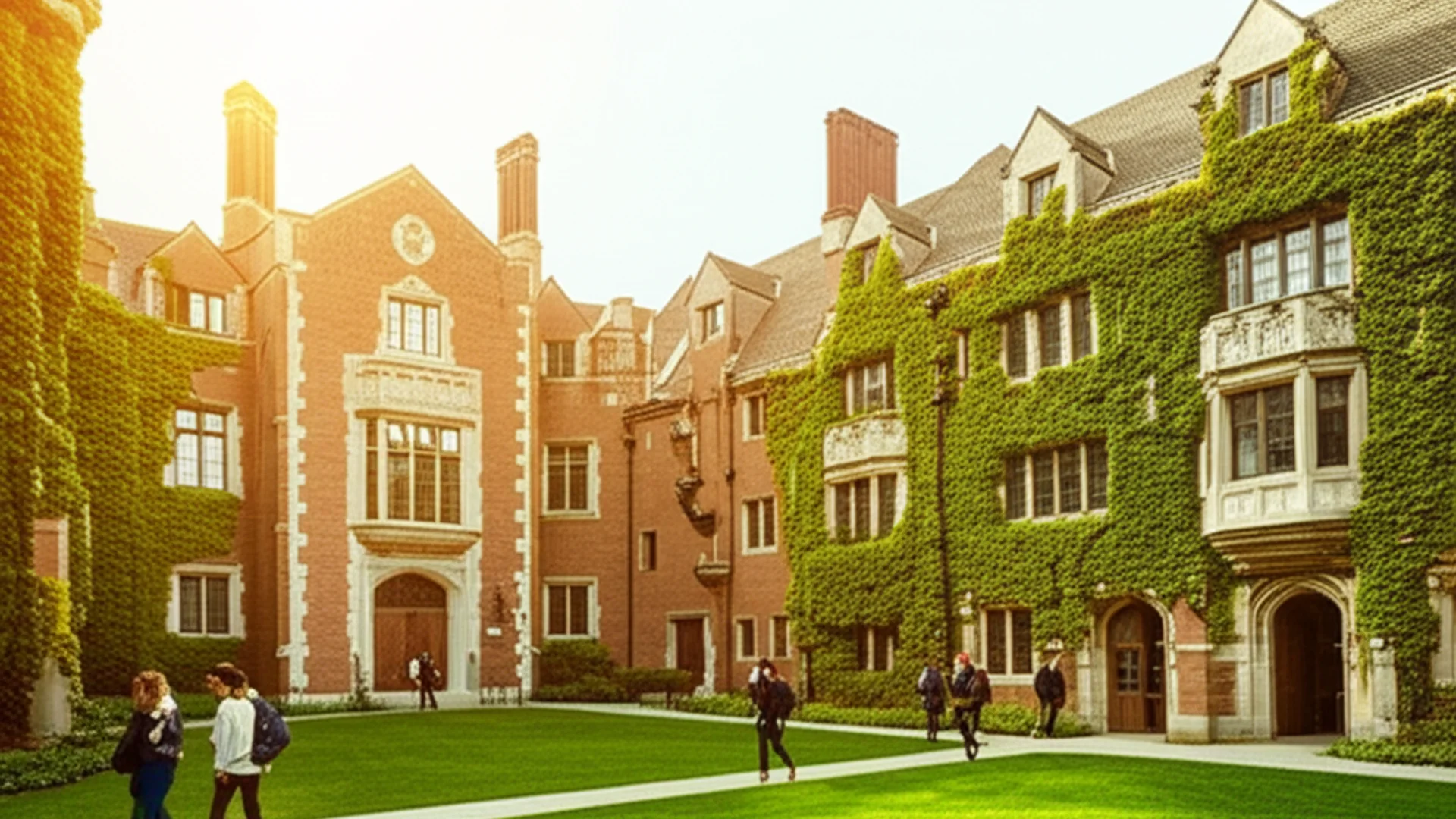
- 1.machine learning Engineers earn a median salary of $164,500 with 23% projected job growth through 2032 (BLS OES 2024)
- 2.Top-ranked Artificial Intelligence programs include Carnegie Mellon University, University of Washington-Seattle Campus, University of Southern California based on graduation rates, program strength, and career outcomes
- 3.Best value: University of Washington-Seattle Campus offers artificial intelligence education at $11,524/year with 97% graduation rate
- 4.35 accredited Artificial Intelligence programs analyzed using IPEDS 2023 completion data
Best Artificial Intelligence Programs - Top 10 Master's
Carnegie Mellon University
CMU created the world's first bachelor's degree in artificial intelligence in 2018 and has led AI education and innovation since the field's inception, with the university being the birthplace of cognitive psychology and home to the first U.S. university robotics institute founded in 1979.
Carnegie Mellon University Master's Artificial Intelligence Program Overview
Hakia ranks Carnegie Mellon University as the #1 master's in artificial intelligence degree program.
Carnegie Mellon University's graduate Artificial Intelligence program offers advanced study for professionals seeking to deepen expertise and accelerate their careers. Research opportunities include the Computer Science Department and Human-Computer Interaction Institute. Industry connections include partnerships with NVIDIA, University of Pittsburgh, White House Office of Science and Technology Policy.
Hakia Insight: Carnegie Mellon University leverages partnerships with NVIDIA and University of Pittsburgh to offer students real-world project experience valued by employers.
Degree Programs
Research Labs & Institutes
computer science
human-computer interaction
natural language processing
machine learning
robotics
software and societal systems
Industry Partners
Admissions
University of Washington-Seattle Campus
UW's AI program uniquely focuses on applying artificial intelligence to engineering problems with physical constraints, featuring a stackable certificate structure that allows working engineers to customize their education while maintaining their careers.
University of Washington-Seattle Campus Master's Artificial Intelligence Program Overview
Hakia ranks University of Washington-Seattle Campus as the #2 master's in artificial intelligence degree program.
University of Washington-Seattle Campus's graduate Artificial Intelligence program offers advanced study for professionals seeking to deepen expertise and accelerate their careers. Research opportunities include the AI Center for Dynamics & Control and SMARTS Lab (Scale-independent Multimodal Automated Real Time Systems). Industry connections include partnerships with Boeing, Amazon, NVIDIA.
Hakia Insight: Students at University of Washington-Seattle Campus benefit from active collaborations with Boeing and Amazon, connecting classroom learning to the workforce.
Degree Programs
Research Labs & Institutes
Data-driven discovery and control of complex dynamical systems
Automated decision-making for cyber-physical systems
Foundational AI and Natural Language Processing for general-purpose AI algorithms
Virtual and augmented reality technologies and applications
Industry Partners
Career Outcomes
Certifications & Designations
Admissions
University of Southern California
USC created one of the first dedicated Master's in AI programs in the nation and pioneered the innovative joint AI for Business undergraduate degree, positioning students at the intersection of technical expertise and business acumen in Los Angeles' thriving tech ecosystem.
University of Southern California Master's Artificial Intelligence Program Overview
Hakia ranks University of Southern California as the #3 master's in artificial intelligence degree program.
University of Southern California's graduate Artificial Intelligence program offers advanced study for professionals seeking to deepen expertise and accelerate their careers. Research opportunities include the Affective Computing Group and Automatic Coordination of Teams (ACT) Lab. Industry connections include partnerships with Amazon, Google, Uber.
Hakia Insight: Students at University of Southern California benefit from active collaborations with Amazon and Google, connecting classroom learning to the workforce.
Degree Programs
Research Labs & Institutes
Emotional AI and human-computer interaction
Multi-agent coordination and teamwork
Autonomous systems and artificial intelligence
Knowledge representation and graph-based reasoning
Cognitive modeling and architecture design
Visual learning and robotic cognition
Algorithmic techniques and AI methods
Social media analysis and computational social science
Interpretable AI and natural language processing
Knowledge discovery and information extraction
Human-robot interaction and collaborative robotics
Socially assistive robotics and human-robot interaction
Machine learning algorithms and data mining
Conversational AI and dialogue systems
AI applications for social good
AI applications in education and training
Industry Partners
Career Outcomes
Admissions
University of Pennsylvania
Penn's AI program is distinguished by its unique emphasis on ethical AI training alongside technical excellence, housed within an Ivy League institution that pioneered breakthrough research like the first programmable chip for training neural networks using light and AI systems that discovered new antibiotics in ancient microbes.
University of Pennsylvania Master's Artificial Intelligence Program Overview
Hakia ranks University of Pennsylvania as the #4 master's in artificial intelligence degree program.
University of Pennsylvania's graduate Artificial Intelligence program offers advanced study for professionals seeking to deepen expertise and accelerate their careers. Research opportunities include the ASSET Center and Warren Center for Network & Data Sciences. Industry connections include partnerships with Amazon Web Services, Google.
Hakia Insight: University of Pennsylvania's industry network, including Amazon Web Services and Google, provides students with internship and hiring pathways.
Degree Programs
Research Labs & Institutes
AI-Enabled Systems: Safe, Explainable and Trustworthy
Network and data science research applications
Innovation in Data Engineering and Science
Penn Research In Embedded Computing and Integrated Systems Engineering
General Robotics, Automation, Sensing and Perception
Industry Partners
Career Outcomes
Admissions
Northwestern University
Northwestern pioneered the integration of AI with business leadership through the MBAi program and maintains one of the most comprehensive AI education ecosystems in higher education, spanning from undergraduate minors to executive education, with specialized research centers collaborating directly with Underwriters Laboratories and Argonne National Laboratory.
Northwestern University Master's Artificial Intelligence Program Overview
Hakia ranks Northwestern University as the #5 master's in artificial intelligence degree program.
Northwestern University's graduate Artificial Intelligence program offers advanced study for professionals seeking to deepen expertise and accelerate their careers. Industry connections include partnerships with Flexcompute, Sony PlayStation, Deloitte. Graduates find positions at Sony PlayStation, Deloitte, Mayo Clinic.
Hakia Insight: Students at Northwestern University benefit from active collaborations with Flexcompute and Sony PlayStation, connecting classroom learning to the workforce.
Degree Programs
Industry Partners
Career Outcomes
Sony PlayStation, Deloitte, Mayo Clinic, Amazon Web Services, TikTok
Admissions
Northeastern University
Northeastern's AI program uniquely combines the nation's #1-ranked co-op system with the Institute for Experiential AI, positioning it as an institutional leader in human-centric and responsible AI development while offering the only interdisciplinary program that spans both computer science and engineering applications.
Northeastern University Master's Artificial Intelligence Program Overview
Hakia ranks Northeastern University as the #6 master's in artificial intelligence degree program.
Northeastern University's graduate Artificial Intelligence program offers advanced study for professionals seeking to deepen expertise and accelerate their careers. Research opportunities include the Relational Agents Group and Lab for Learning and Planning in Robotics. Industry connections include partnerships with Amazon, Ford, Goldman Sachs. Access to Boston tech ecosystem
Hakia Insight: Northeastern University's industry network, including Amazon and Ford, provides students with internship and hiring pathways.
Degree Programs
Research Labs & Institutes
AI-based tools for behavioral health care simulations and virtual agents
Robotics, AI, and machine learning with planning and reinforcement learning
Cognitive and social agent research
Neural AI research
Robotic assistance and manipulation
Health data analysis using AI and signal processing
Data management and database systems
AI in gaming and user interaction
Machine learning for spatial and temporal data
Natural language processing and computational linguistics
Location Advantages
- •Access to Boston tech ecosystem
- •Multi-campus research community
- •Silicon Valley presence through faculty appointments
Industry Partners
Career Outcomes
Admissions
University of San Diego
USD's MS-AAI program is recognized as one of the nation's only 100% online master's in artificial intelligence programs, uniquely integrating ethics, social good, and moral responsibility across the entire curriculum while maintaining a balance between technical skills and practical business applications.
University of San Diego Master's Artificial Intelligence Program Overview
Hakia ranks University of San Diego as the #7 master's in artificial intelligence degree program.
The University of San Diego offers a fully online Master of Science in Applied Artificial Intelligence (MS-AAI), a 30-unit program that can be completed in just 20 months across five semesters. Under the direction of Dr. Ebrahim Tarshizi, this innovative program was developed in close collaboration with key industry and government stakeholders to provide in-depth practical and technical training. Students take two courses per semester in an accelerated format, focusing on one 7-week course at a time, with rolling admissions offering three start dates annually (spring, summer, and fall). The program distinguishes itself through a significant emphasis on real-world applications, ethics, moral responsibility, and social good in designing AI-enabled systems, culminating in a comprehensive capstone project that pairs students with instructors and potential industry partners.
Degree Programs
Admissions
Brandeis University
Brandeis combines small program sizes that ensure individualized faculty mentoring with proximity to Boston's tech corridor, while offering unique interdisciplinary opportunities like computational linguistics and emerging research in AI bias and cybersecurity policy through specialized institutes.
Brandeis University Master's Artificial Intelligence Program Overview
Hakia ranks Brandeis University as the #8 master's in artificial intelligence degree program.
Brandeis University's graduate Artificial Intelligence program offers advanced study for professionals seeking to deepen expertise and accelerate their careers. With a 90% job placement rate, graduates are well-positioned for leadership roles. Research opportunities include the Core Machine Learning Lab and Multilingual Language Processing Lab. Industry connections include partnerships with Google, Microsoft, Amazon. Proximity to Boston technology and innovation hub Graduates find positions at The Knot Worldwide, IMF, Takeda.
Hakia Insight: Brandeis University graduates earn $80,760, driven by the program's industry connections and hands-on artificial intelligence curriculum.
Degree Programs
Research Labs & Institutes
Machine learning and AI-assisted applications including consensus clustering, constrained clustering, and data-centric learning
Natural language processing and computational linguistics across multiple languages
Visual encodings for data science and interpretable AI interfaces
Artificial Intelligence, machine learning, artificial life, and evolutionary robotics
Data systems that self-adapt and protect privacy by design
Robotics theory and practice with Campus Rover navigation project
Computational methods for understanding biological networks
Location Advantages
- •Proximity to Boston technology and innovation hub
- •Access to multicultural finance and tech center
Industry Partners
Career Outcomes
The Knot Worldwide, IMF, Takeda, Washington University in St. Louis
Admissions
University of North Texas
UNT offers Texas's only standalone Master of Science in Artificial Intelligence degree, combining advanced research at the 300-acre Discovery Park facility with the career advantages of being located in the Dallas-Fort Worth metroplex's massive tech corridor.
University of North Texas Master's Artificial Intelligence Program Overview
Hakia ranks University of North Texas as the #9 master's in artificial intelligence degree program.
University of North Texas's graduate Artificial Intelligence program offers advanced study for professionals seeking to deepen expertise and accelerate their careers. Research opportunities include the Applied Artificial Intelligence Research and Discovery Park Research Facility. Industry connections include partnerships with Texas Instruments, Toyota, PepsiCo.
Hakia Insight: University of North Texas's industry network, including Texas Instruments and Toyota, provides students with internship and hiring pathways.
Degree Programs
Research Labs & Institutes
11 specialized research areas including autonomous vehicles, bioinformatics, computer vision, cybersecurity, and natural language processing
State-of-the-art instructional facilities and laboratories with advanced research equipment
Industry Partners
Career Outcomes
Certifications & Designations
Admissions
San Jose State University
SJSU's Silicon Valley location and deep industry partnerships create a uniquely practical pipeline from coursework directly into competitive AI engineering roles at major tech firms.
San Jose State University Master's Artificial Intelligence Program Overview
Hakia ranks San Jose State University as the #10 master's in artificial intelligence degree program.
San Jose State University's graduate Artificial Intelligence program offers advanced study for professionals seeking to deepen expertise and accelerate their careers. Industry connections include partnerships with Google, Intel, Apple. Silicon Valley location provides direct access to Google, Intel, Apple, Cisco, Nvidia, and hundreds of AI-focused startups Graduates find positions at Google, Intel, Apple.
Hakia Insight: San Jose State University's direct partnerships with Google and Intel give students a competitive edge through industry-embedded projects and recruiting pipelines.
Degree Programs
Location Advantages
- •Silicon Valley location provides direct access to Google, Intel, Apple, Cisco, Nvidia, and hundreds of AI-focused startups
- •Established alumni networks at major tech companies help recruiting and mentorship
- •Proximity to advanced AI research and product development centers
Industry Partners
Career Outcomes
Google, Intel, Apple, Cisco, Nvidia
Certifications & Designations
Admissions
Best Artificial Intelligence Programs - Top 10 Master's — Complete Program Data
#1. Carnegie Mellon University Master's Artificial Intelligence Program
Hakia ranks Carnegie Mellon University as the #1 master's in artificial intelligence degree program. Location: Pittsburgh, PA | Type: Private | Tuition: $62,260/year | Graduation Rate: 98% | Score: 100.0
What makes Carnegie Mellon University stand out: CMU created the world's first bachelor's degree in artificial intelligence in 2018 and has led AI education and innovation since the field's inception, with the university being the birthplace of cognitive psychology and home to the first U.S. university robotics institute founded in 1979.
Hakia Insight: Carnegie Mellon University leverages partnerships with NVIDIA and University of Pittsburgh to offer students real-world project experience valued by employers.
Program Overview: Carnegie Mellon University pioneered artificial intelligence education, creating the world's first Bachelor of Science in Artificial Intelligence in 2018 and establishing the nation's first computer science college in 1988. The university offers comprehensive AI education through multiple pathways: the groundbreaking undergraduate BSAI program housed in the School of Computer Science, and the innovative Master of Science in Artificial Intelligence and Innovation (MSAII) through the Language Technologies Institute. The MSAII program uniquely combines rigorous AI and machine learning curriculum with real-world entrepreneurship experience, requiring students to develop actual AI products through a four-semester journey culminating in a capstone project suitable for startup investment or corporate integration. Instruction spans six departments within the School of Computer Science - the Computer Science Department, Human-Computer Interaction Institute, Language Technologies Institute, Machine Learning Department, Robotics Institute, and Software and Societal Systems Department. CMU's AI research tackles real-world challenges through initiatives like the Delphi Research Group (selected by the CDC as the Center for Innovation in Outbreak Analytics), the AI Institute for Societal Decision Making, and partnerships with NVIDIA for robotics and autonomy research. The university emphasizes AI for social good, with mandatory ethics coursework and applications spanning healthcare, transportation, education, and epidemic forecasting.
Degree Programs: Bachelor of Science in Artificial Intelligence (4 years); Master of Science in Artificial Intelligence and Innovation (MSAII) (2 years (4 semesters)); Additional Major in Artificial Intelligence (Concurrent with primary major); Minor in Artificial Intelligence (Concurrent with primary major)
Research Labs: Computer Science Department - computer science; Human-Computer Interaction Institute - human-computer interaction; Language Technologies Institute - natural language processing; Machine Learning Department - machine learning; Robotics Institute - robotics; Software and Societal Systems Department - software and societal systems
Industry Partners: NVIDIA, University of Pittsburgh, White House Office of Science and Technology Policy, National Science Foundation, CDC
Notable Faculty: Reid Simmons (Director of the BSAI program)
Admissions: GPA: 3.0 minimum for MSAII | Acceptance Rate: Not specified
#2. University of Washington-Seattle Campus Master's Artificial Intelligence Program
Hakia ranks University of Washington-Seattle Campus as the #2 master's in artificial intelligence degree program. Location: Seattle, WA | Type: Public | Tuition: $11,524/year | Graduation Rate: 97% | Score: 85.5
What makes University of Washington-Seattle Campus stand out: UW's AI program uniquely focuses on applying artificial intelligence to engineering problems with physical constraints, featuring a stackable certificate structure that allows working engineers to customize their education while maintaining their careers.
Hakia Insight: Students at University of Washington-Seattle Campus benefit from active collaborations with Boeing and Amazon, connecting classroom learning to the workforce.
Program Overview: The University of Washington-Seattle Campus offers a distinctive Master of Science in Artificial Intelligence and Machine Learning for Engineering through its College of Engineering, launching Fall 2026 with applications opening January 2026. This innovative program is specifically designed for working engineers who want to apply AI and ML methods to physical engineering problems like manufacturing, chemical processes, and robotics. The program features a unique stackable structure where students complete two graduate certificates plus an applied capstone project to earn their master's degree. Students begin with the required Graduate Certificate in AI & ML for Engineering, then choose from domain-specific certificates in areas like Data-Driven Dynamic Systems & Control, Modern AI Methods from the prestigious Paul G. Allen School, or Human Centered Artificial Intelligence. The program can be completed entirely online part-time or through a full-time option, making it exceptionally flexible for working professionals. The curriculum is bolstered by renowned faculty like Professor Steve Brunton, who directs the AI Center for Dynamics & Control and serves as a Data Science Fellow at the eScience Institute, and Professor Ashis Banerjee, who leads the SMARTS Lab and serves on the UW Amazon Science Hub advisory board.
Degree Programs: MS in Artificial Intelligence and Machine Learning for Engineering (2-4 years)
Research Labs: AI Center for Dynamics & Control - Data-driven discovery and control of complex dynamical systems; SMARTS Lab (Scale-independent Multimodal Automated Real Time Systems) - Automated decision-making for cyber-physical systems; H2 Lab - Foundational AI and Natural Language Processing for general-purpose AI algorithms; UW Reality Lab - Virtual and augmented reality technologies and applications
Industry Partners: Boeing, Amazon, NVIDIA
Career Outcomes:
Notable Faculty: Steve Brunton (dimensionality reduction, sparse sensing, machine learning for data-driven discovery and control of complex dynamical systems); Ashis Banerjee (automated decision-making for cyber-physical systems, optimization, machine learning, autonomous robotics); Taylor Kessler Faulkner (AI, human-robot interaction, assistive robotics); Natasha Jaques; Hannaneh Hajishirzi
Admissions: GPA: 3.0 minimum cumulative GPA
Accreditations: ABET
#3. University of Southern California Master's Artificial Intelligence Program
Hakia ranks University of Southern California as the #3 master's in artificial intelligence degree program. Location: Los Angeles, CA | Type: Private | Tuition: $66,640/year | Graduation Rate: 92% | Score: 80.0
What makes University of Southern California stand out: USC created one of the first dedicated Master's in AI programs in the nation and pioneered the innovative joint AI for Business undergraduate degree, positioning students at the intersection of technical expertise and business acumen in Los Angeles' thriving tech ecosystem.
Hakia Insight: Students at University of Southern California benefit from active collaborations with Amazon and Google, connecting classroom learning to the workforce.
Program Overview: The University of Southern California stands as a national pioneer in artificial intelligence education, offering one of the first dedicated Master of Science in Computer Science (Artificial Intelligence) programs in the United States. This 32-unit program, housed within the prestigious Viterbi School of Engineering, provides rigorous training in deep learning theories and applications, covering machine learning, statistics, computer vision, natural language processing, and robotics. USC has gone beyond traditional offerings by creating innovative partnerships, including the groundbreaking joint BS in Artificial Intelligence for Business with the Marshall School of Business, demonstrating the university's commitment to interdisciplinary AI education. The program benefits from USC's strong research ecosystem, anchored by the Center for Artificial Intelligence in Society (CAIS), which focuses on AI for social good across environment, health and wellbeing, and homelessness initiatives. Students gain access to over 30 specialized research labs spanning artificial intelligence, machine learning, computer vision, robotics, and human-computer interaction. The curriculum balances theoretical foundations with practical applications, requiring core courses in algorithms, AI foundations, deep learning, machine learning, and web technologies, complemented by specialized electives in areas like multimodal learning, knowledge graphs, and AI ethics.
Degree Programs: BS (4 years); MS; B.S. Program; M.S. Program; Ph.D. Program; Data Science Program; Graduate Certificate
Research Labs: Affective Computing Group - Emotional AI and human-computer interaction; Automatic Coordination of Teams (ACT) Lab - Multi-agent coordination and teamwork; Center for Autonomy and AI - Autonomous systems and artificial intelligence; Center on Knowledge Graphs - Knowledge representation and graph-based reasoning; Cognitive Architecture - Cognitive modeling and architecture design; Cognitive Learning for Vision and Robotics Lab - Visual learning and robotic cognition; Collaboratory for Algorithmic Techniques and Artifical Intelligence (CATAI) - Algorithmic techniques and AI methods; Computational Social Science Laboratory - Social media analysis and computational social science; Data, Interpretability, Language and Learning (DILL) Lab - Interpretable AI and natural language processing; Intelligence and Knowledge Discovery (INK) Research Lab - Knowledge discovery and information extraction; Interactive and Collaborative Autonomous Robotic Systems (ICAROS) Lab - Human-robot interaction and collaborative robotics; Interaction Lab - Socially assistive robotics and human-robot interaction; Machine Learning and Data Mining Lab (Melady) - Machine learning algorithms and data mining; Natural Language Dialogue Group - Conversational AI and dialogue systems; USC Center for Artificial Intelligence in Society - AI applications for social good; AI Research Center of Excellence for Education (AIRCOEE) - AI applications in education and training
Industry Partners: Amazon, Google, Uber, Microsoft
Career Outcomes:
Notable Faculty: Maja Matarić (Socially assistive robotics and human-robot interaction); Gaurav Sukhatme (Robotics and autonomous systems); Yolanda Gil (Artificial intelligence and knowledge systems); Jonathan Gratch (Virtual humans and computational psychology); Craig Knoblock (Information integration and knowledge graphs); David Kempe (Algorithms and machine learning theory); Laurent Itti (Computer vision and computational neuroscience); Bistra Dilkina (AI for social good and computational sustainability); Bill Swartout (AI systems and virtual humans)
Admissions:
#4. University of Pennsylvania Master's Artificial Intelligence Program
Hakia ranks University of Pennsylvania as the #4 master's in artificial intelligence degree program. Location: Philadelphia, PA | Type: Private | Tuition: $58,620/year | Graduation Rate: 100% | Score: 79.1
What makes University of Pennsylvania stand out: Penn's AI program is distinguished by its unique emphasis on ethical AI training alongside technical excellence, housed within an Ivy League institution that pioneered breakthrough research like the first programmable chip for training neural networks using light and AI systems that discovered new antibiotics in ancient microbes.
Hakia Insight: University of Pennsylvania's industry network, including Amazon Web Services and Google, provides students with internship and hiring pathways.
Program Overview: The University of Pennsylvania's Artificial Intelligence program operates through the prestigious Raj and Neera Singh Program in Artificial Intelligence, representing one of the most comprehensive AI education initiatives in the Ivy League. Penn offers both undergraduate (B.S.E.) and graduate (M.S.E.) pathways, with the graduate program available entirely online for working professionals. The program uniquely blends technical rigor in machine learning, natural language processing, and deep learning with strong ethical training, preparing students to navigate AI's societal implications. What sets Penn apart is its integration across multiple research centers including the ASSET Center for trustworthy AI, the Warren Center for Network and Data Sciences, and the IDEAS Center, creating an ecosystem where students work alongside faculty who are shaping the future of AI across industries from healthcare to finance.
Degree Programs: Master of Science in Engineering in AI (MSE-AI) Online (Variable); Bachelor of Science in Engineering in AI (B.S.E.) (4 years)
Research Labs: ASSET Center - AI-Enabled Systems: Safe, Explainable and Trustworthy; Warren Center for Network & Data Sciences - Network and data science research applications; IDEAS Center - Innovation in Data Engineering and Science; PRECISE Center - Penn Research In Embedded Computing and Integrated Systems Engineering; GRASP Lab - General Robotics, Automation, Sensing and Perception
Industry Partners: Amazon Web Services, Google
Career Outcomes:
Notable Faculty: George J. Pappas (UPS Foundation Professor of Transportation in Electrical and Systems Engineering, Director of the B.S.E. in AI Program); Chris Callison-Burch (Professor in Computer and Information Science, Director of the M.S.E. in AI Online Program); Rajeev Alur (Zisman Family Professor in Computer and Information Science, Founding Director of ASSET Center); Michael Kearns (National Center Professor of Management & Technology in Computer and Information Science); René Vidal (Rachleff University Professor in Electrical and Systems Engineering, Director of IDEAS Initiative); Paris Perdikaris (Associate Professor, developed Aurora AI model for weather prediction)
Admissions:
#5. Northwestern University Master's Artificial Intelligence Program
Hakia ranks Northwestern University as the #5 master's in artificial intelligence degree program. Location: Evanston, IL | Type: Private | Tuition: $64,887/year | Graduation Rate: 90% | Score: 71.0
What makes Northwestern University stand out: Northwestern pioneered the integration of AI with business leadership through the MBAi program and maintains one of the most comprehensive AI education ecosystems in higher education, spanning from undergraduate minors to executive education, with specialized research centers collaborating directly with Underwriters Laboratories and Argonne National Laboratory.
Hakia Insight: Students at Northwestern University benefit from active collaborations with Flexcompute and Sony PlayStation, connecting classroom learning to the workforce.
Program Overview: Northwestern University offers a comprehensive AI education ecosystem spanning undergraduate through executive levels across multiple schools. The flagship Master of Science in Artificial Intelligence, housed in the McCormick School of Engineering, is a professionally-focused 15-month program that caps enrollment at just 45 students annually to ensure personalized attention. The program emphasizes practical application with industry capstone projects and partnerships with engineering's MS AI students. Northwestern's AI offerings extend far beyond this core program, including the innovative MBAi joint degree between Kellogg Business School and McCormick Engineering, specialized AI tracks in data science and information systems through the School of Professional Studies, and extensive undergraduate options like AI minors and data science majors. The university's approach integrates technical depth with real-world application, supported by over 15 specialized research centers including the Center for Advancing Safety of Machine Intelligence (CASMI), the Center for Deep Learning, and the Institute for Artificial Intelligence in Medicine.
Degree Programs: Master of Science in Artificial Intelligence (15 months); MBAi Program (20 months (5 quarters)); MS in Data Science with AI Specialization (varies); MS in Information Systems with AI Specialization (varies); PhD in Computer Science (4-6 years); Advanced Graduate Certificate in Artificial Intelligence (varies)
Industry Partners: Flexcompute, Sony PlayStation, Deloitte, McDonald's, Annalect, Mayo Clinic, Amazon Web Services, Bain Capital Ventures, TikTok
Career Outcomes: | Top Employers: Sony PlayStation, Deloitte, Mayo Clinic, Amazon Web Services, TikTok, Bain Capital Ventures | Common Roles: Marketing Manager, Machine Learning Engineer, Prompt Engineer, Data Scientist, AI Engineer
Notable Faculty: Kris Hammond (Program Director, AI systems); Mohammed Alam (AI theoretical and practical applications)
Admissions:
#6. Northeastern University Master's Artificial Intelligence Program
Hakia ranks Northeastern University as the #6 master's in artificial intelligence degree program. Location: Boston, MA | Type: Private | Tuition: $62,000/year | Score: 69.5
What makes Northeastern University stand out: Northeastern's AI program uniquely combines the nation's #1-ranked co-op system with the Institute for Experiential AI, positioning it as an institutional leader in human-centric and responsible AI development while offering the only interdisciplinary program that spans both computer science and engineering applications.
Hakia Insight: Northeastern University's industry network, including Amazon and Ford, provides students with internship and hiring pathways.
Program Overview: Northeastern University's MS in Artificial Intelligence stands as one of the most comprehensive interdisciplinary AI programs in the nation, jointly offered by the prestigious Khoury College of Computer Sciences and the College of Engineering. This dynamic 32-credit program spans 2-2.5 years and uniquely combines technical mastery with ethical AI development, offering five distinct concentrations: machine learning, robotics and agent-based systems, computer vision, energy systems, and continuous process engineering. Students dive deep into foundational AI algorithms while gaining hands-on experience through Northeastern's renowned co-op program, ranked #1 nationally by U.S. News & World Report, with partnerships spanning Amazon, Ford, Goldman Sachs, and the U.S. Soccer Federation. What truly distinguishes this program is its emphasis on 'human-centric and responsible AI' through the Institute for Experiential AI, where students work on real-world challenges like speech impairment solutions, climate vulnerability assessments, and bias detection in financial services. The curriculum goes beyond traditional AI education by integrating ethics coursework and requiring students to build AI systems that solve actual problems across industries, from healthcare and energy to manufacturing and autonomous systems.
Degree Programs: MS in Artificial Intelligence (2-2.5 years); MS in Artificial Intelligence - Align (2.5 years)
Research Labs: Relational Agents Group - AI-based tools for behavioral health care simulations and virtual agents; Lab for Learning and Planning in Robotics - Robotics, AI, and machine learning with planning and reinforcement learning; Cognitive Embodied Social Agents Research (CESAR) - Cognitive and social agent research; NEURAI Lab - Neural AI research; Helping Hands Lab - Robotic assistance and manipulation; Signal Processing and Artificial Intelligence for Time Variant Health Data (SATH) Lab - Health data analysis using AI and signal processing; Databases (DATA Lab) - Data management and database systems; Game User Interaction And Intelligence Lab (GUII) - AI in gaming and user interaction; Spatiotemporal Learning Group - Machine learning for spatial and temporal data; Northeastern Natural Language Processing Research Group - Natural language processing and computational linguistics
Industry Partners: Amazon, Ford, Goldman Sachs, Roche/Genentech, U.S. Soccer Federation, Maine Health
Career Outcomes:
Notable Faculty: Dr. Tina Eliassi-Rad (Data mining, machine learning, and network science); Dr. Usama Fayyad (Data science, machine learning, AI, and data mining); Dr. Christopher Amato (Robotics, AI, and machine learning in multi-agent systems); Dr. Yun Raymond Fu (AI, machine learning, data mining, and computer vision); Dr. Ehsan Elhamifar (Computer vision and AI learning from visual data); Dr. David Bau (Human-computer interaction and machine learning interpretability)
Admissions:
#7. University of San Diego Master's Artificial Intelligence Program
Hakia ranks University of San Diego as the #7 master's in artificial intelligence degree program. Location: San Diego, CA | Type: Private | Tuition: $55,690/year | Graduation Rate: 97% | Score: 68.4
What makes University of San Diego stand out: USD's MS-AAI program is recognized as one of the nation's only 100% online master's in artificial intelligence programs, uniquely integrating ethics, social good, and moral responsibility across the entire curriculum while maintaining a balance between technical skills and practical business applications.
Program Overview: The University of San Diego offers a fully online Master of Science in Applied Artificial Intelligence (MS-AAI), a 30-unit program that can be completed in just 20 months across five semesters. Under the direction of Dr. Ebrahim Tarshizi, this innovative program was developed in close collaboration with key industry and government stakeholders to provide in-depth practical and technical training. Students take two courses per semester in an accelerated format, focusing on one 7-week course at a time, with rolling admissions offering three start dates annually (spring, summer, and fall). The program distinguishes itself through a significant emphasis on real-world applications, ethics, moral responsibility, and social good in designing AI-enabled systems, culminating in a comprehensive capstone project that pairs students with instructors and potential industry partners.
Degree Programs: MS in Applied Artificial Intelligence (20 months)
Admissions: GPA: 2.75 minimum for STEM degrees | Acceptance Rate: Not specified
#8. Brandeis University Master's Artificial Intelligence Program
Hakia ranks Brandeis University as the #8 master's in artificial intelligence degree program. Location: Waltham, MA | Type: Private | Tuition: $64,348/year | Graduation Rate: 99% | Score: 67.8
What makes Brandeis University stand out: Brandeis combines small program sizes that ensure individualized faculty mentoring with proximity to Boston's tech corridor, while offering unique interdisciplinary opportunities like computational linguistics and emerging research in AI bias and cybersecurity policy through specialized institutes.
Hakia Insight: Brandeis University graduates earn $80,760, driven by the program's industry connections and hands-on artificial intelligence curriculum.
Program Overview: Brandeis University's Michtom School of Computer Science offers a comprehensive 9-course Master of Science in Computer Science designed for students who already hold an undergraduate degree in computer science. This 3-semester, 36-credit program provides in-depth exposure to advanced areas including distributed computing, big data, machine learning, and computational linguistics. The school also offers specialized tracks like the Master of Science in Computational Linguistics, which bridges AI and language processing. What sets Brandeis apart is its intimate scale - the graduate programs are deliberately small, ensuring individualized attention while maintaining rigorous interdisciplinary training that's become a hallmark of the university. Students benefit from proximity to Boston's thriving tech scene, with companies like Google, Microsoft, Oracle, and Amazon offering research, internship, and career opportunities just minutes away.
Degree Programs: Bachelor of Arts in Computer Science (4 years); Bachelor of Science in Computer Science (4 years); Master of Science in Computer Science (2 years); Master of Science in Computer Science for Non-Majors (2 years); PhD in Computer Science (4-6 years); Master of Science in Business Analytics with AI Concentration (12-16 months); Master of Science in Business Analytics (Online) (17-20 months); 5-year Bachelor's/Master's Program (5 years)
Research Labs: Core Machine Learning Lab - Machine learning and AI-assisted applications including consensus clustering, constrained clustering, and data-centric learning; Multilingual Language Processing Lab - Natural language processing and computational linguistics across multiple languages; Brandeis Visual Analytics Laboratory - Visual encodings for data science and interpretable AI interfaces; Dynamical & Evolutionary Machine Organization Lab - Artificial Intelligence, machine learning, artificial life, and evolutionary robotics; Smart and Scalable Data Systems Lab - Data systems that self-adapt and protect privacy by design; Brandeis Autonomous Robotics Teaching Laboratory - Robotics theory and practice with Campus Rover navigation project; Computational Systems Biology Group - Computational methods for understanding biological networks
Industry Partners: Google, Microsoft, Amazon, Dell EMC, Uber, BBN Technologies
Career Outcomes: Placement Rate: 90% | Top Employers: The Knot Worldwide, IMF, Takeda, Washington University in St. Louis | Common Roles: Data Scientist, Research Analyst, Statistical Data Analyst, Senior Marketing Operations Analyst
Notable Faculty: Hongfu Liu (Machine learning and artificial intelligence-assisted applications); Nianwen Xue (Natural language processing and computational linguistics); Dylan Cashman (Visual analytics and interpretable AI interfaces); Jordan Pollack (Artificial intelligence, machine learning, and artificial life); Subhadeep Sarkar (Data systems and privacy-aware computing); Pito Salas (Robotics and autonomous systems)
Admissions:
#9. University of North Texas Master's Artificial Intelligence Program
Hakia ranks University of North Texas as the #9 master's in artificial intelligence degree program. Location: Denton, TX | Type: Public | Tuition: $8,319/year | Graduation Rate: 70% | Score: 65.0
What makes University of North Texas stand out: UNT offers Texas's only standalone Master of Science in Artificial Intelligence degree, combining advanced research at the 300-acre Discovery Park facility with the career advantages of being located in the Dallas-Fort Worth metroplex's massive tech corridor.
Hakia Insight: University of North Texas's industry network, including Texas Instruments and Toyota, provides students with internship and hiring pathways.
Program Overview: The University of North Texas offers a comprehensive Master of Science in Artificial Intelligence through its College of Engineering, representing the only standalone MS in AI degree in the state of Texas. This 33-credit hour program can be completed in 2-3 years and is available both on-campus at UNT's Discovery Park research facility and fully online, providing exceptional flexibility for working professionals. The program features three distinct concentration areas: Machine Learning, Biomedical Engineering, and Autonomous Systems, allowing students to tailor their studies to specific career interests. Students engage with advanced research across 11 specialized areas including computer vision, natural language processing, cybersecurity, and materials design. What sets UNT's AI program apart is its interdisciplinary approach and strong research foundation, with over 30 faculty members and more than 100 PhD students driving AI research across multiple departments. The program is housed at Discovery Park, a 300-acre research facility featuring state-of-the-art laboratories and equipment, located just five miles from the main campus. Students have access to bridge courses like 'Software Development for Artificial Intelligence' and 'Fundamentals of Artificial Intelligence' to build necessary programming foundations, while core courses dive deep into machine learning, deep learning, big data, and feature engineering. The program's location in the Dallas-Fort Worth metroplex, home to the nation's fourth-largest concentration of Fortune 500 companies, provides internship and career opportunities.
Degree Programs: MS in Artificial Intelligence (2-3 years); Combined BS/MS Computer Science and AI (5-6 years); Graduate Academic Certificate in AI (1 year)
Research Labs: Applied Artificial Intelligence Research - 11 specialized research areas including autonomous vehicles, bioinformatics, computer vision, cybersecurity, and natural language processing; Discovery Park Research Facility - State-of-the-art instructional facilities and laboratories with advanced research equipment
Industry Partners: Texas Instruments, Toyota, PepsiCo, IBM
Career Outcomes: | Common Roles: Data Scientists, Software Engineers, Machine Learning Engineers, AI Engineers
Admissions:
Accreditations: STEM-designated
#10. San Jose State University Master's Artificial Intelligence Program
Hakia ranks San Jose State University as the #10 master's in artificial intelligence degree program. Location: San Jose, CA | Type: Public | Tuition: $5,742/year | Graduation Rate: 100% | Score: 64.8
What makes San Jose State University stand out: SJSU's Silicon Valley location and deep industry partnerships create a uniquely practical pipeline from coursework directly into competitive AI engineering roles at major tech firms.
Hakia Insight: San Jose State University's direct partnerships with Google and Intel give students a competitive edge through industry-embedded projects and recruiting pipelines.
Program Overview: SJSU's computer science program benefits directly from its Silicon Valley location, where students gain internship and networking opportunities at leading AI companies integrated into the curriculum itself. The school offers specialized courses in machine learning, deep learning, computer vision, and data mining, with faculty who actively consult for industry, bringing advanced techniques and real project challenges into the classroom. The capstone and senior design projects often partner with tech companies, allowing students to work on AI problems they'd encounter in their first industry roles. Graduates from SJSU are well-known in the Valley's hiring pipelines, particularly at companies like Google, Intel, Apple, and Cisco, where many alumni hold senior technical positions. The program strikes a practical balance: solid theoretical foundations paired with immediate industry relevance. Students benefit from a large, collaborative peer network and the constant influx of visiting engineers and recruiters on campus. SJSU's reputation in the Valley makes the degree a direct pathway to well-compensated ML and AI roles.
Degree Programs: BS in Computer Science (AI/ML focus) (4 years); MS in Computer Science (AI/ML track) (2 years)
Industry Partners: Google, Intel, Apple, Cisco, Nvidia
Career Outcomes: | Top Employers: Google, Intel, Apple, Cisco, Nvidia, Amazon | Common Roles: Machine Learning Engineer, Software Engineer, Data Scientist, AI Systems Engineer
Admissions:
Accreditations: ABET accredited
Best Artificial Intelligence Programs - Compare Top 5 Master's
| School | Location | Type | Tuition | Grad Rate | Score |
|---|---|---|---|---|---|
| #1 Carnegie Mellon University | Pittsburgh, PA | Private | $62,260 | 98% | 100/100 |
| #2 University of Washington-Seattle Campus | Seattle, WA | Public | $11,524 | 97% | 85.5/100 |
| #3 University of Southern California | Los Angeles, CA | Private | $66,640 | 92% | 80/100 |
| #4 University of Pennsylvania | Philadelphia, PA | Private | $58,620 | 1% | 79.1/100 |
| #5 Northwestern University | Evanston, IL | Private | $64,887 | 90% | 71/100 |
Data from IPEDS 2023. Tuition shown is in-state for public schools.
Top 50 AI Master's Programs 2026
| Rank | |||||||
|---|---|---|---|---|---|---|---|
| 1 | Carnegie Mellon University | Pittsburgh, PA | Private | $62,260 | 98% | — | 100 |
| 2 | University of Washington-Seattle Campus | Seattle, WA | Public | $11,524 | 97% | — | 85.5 |
| 3 | University of Southern California | Los Angeles, CA | Private | $66,640 | 92% | — | 80 |
| 4 | University of Pennsylvania | Philadelphia, PA | Private | $58,620 | 100% | — | 79.1 |
| 5 | Northwestern University | Evanston, IL | Private | $64,887 | 90% | — | 71 |
| 6 | Northeastern University | Boston, MA | Private | $62,000 | — | — | 69.5 |
| 7 | University of San Diego | San Diego, CA | Private | $55,690 | 97% | — | 68.4 |
| 8 | Brandeis University | Waltham, MA | Private | $64,348 | 99% | — | 67.8 |
| 9 | University of North Texas | Denton, TX | Public | $8,319 | 70% | — | 65 |
| 10 | San Jose State University | San Jose, CA | Public | $5,742 | 100% | — | 64.8 |
| 11 | University of California-Santa Cruz | Santa Cruz, CA | Public | $11,834 | 93% | — | 64.5 |
| 12 | Illinois Institute of Technology | Chicago, IL | Private | $49,607 | 89% | — | 63.4 |
| 13 | University of Georgia | Athens, GA | Public | $9,790 | 95% | — | 62.8 |
| 14 | Johns Hopkins University | Baltimore, MD | Private | $62,840 | — | — | 62.7 |
| 15 | University of Central Florida | Orlando, FL | Public | $4,478 | 93% | — | 62.2 |
| 16 | Boston University | Boston, MA | Private | $63,798 | — | — | 58.9 |
| 17 | University of Arizona | Tucson, AZ | Public | $11,546 | 68% | — | 57.7 |
| 18 | University of Colorado Boulder | Boulder, CO | Public | $13,910 | 87% | — | 57.2 |
| 19 | University of Pittsburgh-Pittsburgh Campus | Pittsburgh, PA | Public | $20,154 | 88% | — | 57.1 |
| 20 | Florida Atlantic University | Boca Raton, FL | Public | $2,522 | 77% | — | 56.1 |
| 21 | Yeshiva University | New York, NY | Private | $46,000 | 91% | — | 56.1 |
| 22 | Saint Louis University | Saint Louis, MO | Private | $52,260 | 92% | — | 55.4 |
| 23 | University of Cincinnati-Main Campus | Cincinnati, OH | Public | $11,228 | 78% | — | 54.7 |
| 24 | Duke University | Durham, NC | Private | $63,450 | — | — | 54.6 |
| 25 | Oregon State University | Corvallis, OR | Public | $11,145 | 84% | — | 53.9 |
Showing 1–25 of 35
AI Master's Programs Overview: What You Need to Know
The artificial intelligence master's degree landscape has transformed over the past five years. From just 34 dedicated AI programs in 2019, the field now includes 184 accredited master's programs specifically focused on artificial intelligence, machine learning, and related disciplines (IPEDS 2023). These programs represent a $2.3 billion annual investment in AI education, producing over 12,000 graduates annually to meet unprecedented industry demand.
Top-tier programs like Carnegie Mellon's Machine Learning program and Stanford's AI Graduate Certificate command premium tuition rates but deliver exceptional career outcomes. Graduates from the top 20 programs report -$165,000, with s at leading technology companies (BLS OEWS May 2024).
The curriculum focus varies significantly across programs. Research-intensive universities emphasize theoretical foundations, deep learning architectures, and original research contributions. Professional master's programs prioritize applied skills in natural language processing, computer vision, and enterprise AI deployment. Students should carefully evaluate program structure, faculty expertise, and career outcomes when making their selection.
Industry partnerships play a crucial role in program quality. Leading programs maintain active collaborations with Google DeepMind, OpenAI, Microsoft Research, and NVIDIA. These relationships provide students with access to advanced research, internship opportunities, and direct paths to high-paying AI engineering roles. Our rankings heavily weight these industry connections alongside traditional academic metrics.
Career Advancement: Why Get a Master's?
A master's degree in Artificial Intelligence provides a significant career advantage. According to the Bureau of Labor Statistics, professionals with master's degrees earn 20% more on average than those with bachelor's degrees in the same field. For Artificial Intelligence specifically, the salary premium can reach $25,000-$40,000 annually.
When a Master's Degree Pays Off:
- Management track. Senior/Director roles increasingly require or strongly prefer graduate degrees
- Specialization. Deep expertise in AI/ML, security, or data engineering commands premium salaries
- Career switching. Master's programs accept students from non-technical backgrounds
- Research roles. Required for R&D positions at Google, Meta, Microsoft Research, and national labs
- International careers. Many countries require master's for skilled worker visas
The Graduate Management Admission Council reports that 93% of employers plan to maintain or increase hiring of graduate degree holders, with tech roles showing the strongest demand.
Work Experience Requirements
Work experience requirements vary significantly across Artificial Intelligence master's programs. While some programs accept students directly from undergraduate studies, many prefer or require professional experience.
Typical Experience Requirements:
- Elite programs (Stanford, MIT, CMU). Not required but 60-70% of admits have 2+ years experience
- Professional master's programs. Often require 2-5 years. Designed for working professionals
- Online programs. More flexible. Many accept recent graduates
- Executive programs. Require 5-10+ years. Designed for senior professionals
Pro tip: If you lack work experience, strong research experience, publications, or exceptional projects can compensate. Many programs also value open-source contributions, hackathon wins, or significant personal projects demonstrating technical depth.
Thesis vs Non-Thesis Programs
Most Artificial Intelligence master's programs offer both thesis and non-thesis (coursework-only) tracks. Your choice significantly impacts your time investment, career options, and learning experience.
Thesis Track (Recommended for PhD/Research Careers):
- Original research project over 1-2 semesters with faculty advisor
- 6 fewer course credits in exchange for thesis work
- Results in publishable research. Strengthens PhD applications significantly
- Develops deep expertise in narrow area. Valuable for R&D roles
- Average completion: 2-2.5 years
Non-Thesis/Coursework Track (Recommended for Industry):
- Additional courses instead of thesis. Broader skill coverage
- Often includes capstone project with industry partner
- Faster completion: 1.5-2 years
- Better for career changers seeking breadth over depth
- Some programs offer thesis-equivalent options (comprehensive exam, portfolio)
Specialization Tracks
Master's programs in Artificial Intelligence offer specialization tracks that allow you to develop deep expertise in high-demand areas. Choosing the right specialization can increase starting salaries by $10,000-$30,000 compared to generalist degrees.
High-Demand Specializations (2024-2025):
- Artificial Intelligence/Machine Learning. Highest demand. Median salary $165,000 (Levels.fyi)
- Cybersecurity, 35% job growth projected through 2032 (BLS)
- Cloud Computing/Distributed Systems. Critical for enterprise roles. AWS/Azure/GCP certifications add value
- Data Engineering. Pipeline architecture for big data. Median salary $145,000
- Human-Computer Interaction. UX research and design. Strong demand at consumer tech companies
When selecting a specialization, consider both current salary premiums and projected growth. The World Economic Forum identifies AI specialists, data analysts, and cybersecurity experts among the fastest-growing roles through 2030.
Part-Time & Evening Options
Part-time and evening Artificial Intelligence master's programs allow working professionals to advance their careers without leaving their jobs. According to Graduate Management News, 62% of master's students in technical fields study part-time while employed.
Part-Time Format Options:
- Evening classes, 2-3 nights per week, 6-7pm start times. Popular in metro areas
- Weekend intensive. Friday evening + Saturday sessions. Less frequent campus visits
- Hybrid programs. Online coursework with periodic in-person residencies (1-2 weekends per semester)
- Fully asynchronous online. Maximum flexibility. Complete coursework on your schedule
Typical Timeline: Part-time programs take 2.5-4 years versus 1.5-2 years full-time. Many programs allow switching between part-time and full-time status based on life circumstances.
See our best online Artificial Intelligence master's programs for flexible options designed for working professionals.
Career Paths
AI Research Scientist
SOC 15-1221Conduct original research in AI/ML, publish papers, and develop new algorithms. Requires strong mathematical background and research experience.
Computer Vision Engineer
SOC 15-1252Develop image and video processing systems. Work on autonomous vehicles, medical imaging, and surveillance applications.
NLP Engineer
SOC 15-1252Build systems that understand and generate human language. Work on chatbots, translation systems, and content analysis platforms.
AI Product Manager
SOC 11-3021Lead AI product development from conception to deployment. Bridge technical teams with business stakeholders and market requirements.
AI Master's Programs by State
| State | Total Programs | Median Tuition | Top Program |
|---|---|---|---|
| Best Artificial Intelligence Master's Programs in California | 28 | $42,500 | Stanford University |
| Best Artificial Intelligence Master's Programs in Massachusetts | 12 | $52,800 | Massachusetts Institute of Technology |
| Best Artificial Intelligence Master's Programs in Texas | 15 | $28,400 | University of Texas at Austin |
| Best Artificial Intelligence Master's Programs in New York | 18 | $45,200 | Cornell University |
| Best Artificial Intelligence Master's Programs in Pennsylvania | 11 | $48,600 | Carnegie Mellon University |
| Best Artificial Intelligence Master's Programs in Illinois | 9 | $32,400 | University of Illinois Urbana-Champaign |
| Best Artificial Intelligence Master's Programs in Washington | 7 | $38,200 | University of Washington |
| Best Artificial Intelligence Master's Programs in Georgia | 8 | $25,600 | Georgia Institute of Technology |
Financial Aid and Funding Options for AI Students
Multiple funding sources make AI master's programs more accessible than sticker prices suggest. Research assistantships provide $20,000-$35,000 annually plus tuition remission in exchange for 20 hours weekly research work. Teaching assistantships offer similar compensation for instructional duties. Many students combine multiple funding sources to minimize debt.
Industry partnerships create unique funding opportunities. Companies sponsor students through direct scholarships, paid internships, and tuition reimbursement programs. Major tech companies actively recruit from top AI programs, offering signing bonuses that can offset educational costs. Federal financial aid and specialized STEM scholarships provide additional support.
Employer Tuition Sponsorship
Many employers offer tuition assistance or full sponsorship for Artificial Intelligence master's degrees. According to the Society for Human Resource Management, 56% of companies offer some form of educational assistance, with tech companies among the most generous.
Top Employer Tuition Benefits:
- Google. Up to $12,000/year for approved programs. No service commitment
- Amazon. Career Choice covers 95% of tuition for select programs. Plus upskilling programs
- Microsoft, $10,000/year with manager approval. Additional funding for certifications
- Apple. Full tuition reimbursement for approved degrees with 2-year service commitment
- Deloitte/Big 4. Full sponsorship for relevant master's programs. Require 2 years post-completion
Strategy for Maximizing Benefits:
- Check if your employer has partnerships with specific universities (often reduces approval hurdles)
- Many programs qualify for the federal $5,250 tax-free employer education benefit
- Negotiate sponsorship during job offers, easier than requesting after starting
- Consider part-time programs to maintain employment while studying
Choose Your AI Master's Program Type
- You want to pursue PhD or research scientist roles
- You have strong mathematical background and research interest
- Cost isn't a primary constraint
- You prefer small cohort sizes and intensive mentorship
- You want excellent education at lower cost
- You're comfortable with larger class sizes
- You value diverse student backgrounds
- You prefer practical, industry-focused curriculum
- You're working full-time and need flexibility
- Cost minimization is a priority
- You're self-motivated and comfortable with remote learning
- You have existing tech industry connections
Machine Learning & AI Career Track
+$25K avg salary increase·9 months
- University of Arizona graduate certificate included
- 1-on-1 mentorship from industry professionals
- Money-back job guarantee
Affiliate link · We may earn a commission at no extra cost to you.
Frequently Asked Questions About AI Master's Programs
Based on 742 programs from IPEDS 2023
Our rankings are based on analysis of artificial intelligence degree programs nationwide using IPEDS 2023 data and BLS labor statistics. Rankings are produced algorithmically without editorial intervention, ensuring objectivity and reproducibility.
Ranking Factors
Number of graduates per year in this specific field (CIP code). Larger programs indicate established departments with more resources, course offerings, and career services. Measured from IPEDS Completions data.
Percentage of students completing their degree within 150% of expected time (6 years for bachelor's, 3 years for associate's). Higher rates indicate better student support and program quality. Source: IPEDS Graduation Rates survey.
Admission rate (lower = more selective). More selective institutions have stronger academic environments and more competitive graduates. For open-admission institutions, we use graduation rates as a proxy for quality.
National salary data for artificial intelligence graduates, factored into institutional scores based on job market strength.
Ranking Categories
Overall quality using all four factors weighted as shown above. Ideal for students seeking the strongest academic experience.
Same methodology, filtered to schools with fully online or hybrid options (IPEDS Distance Education data). Some schools may have lower graduation rates due to different student demographics.
Ranked primarily by net cost (tuition minus average institutional aid), with quality factors as tiebreakers. Best for cost-conscious students.
Data Sources
- IPEDS 2023 — Institutional characteristics, completions, graduation rates
- BLS OEWS 2024 — National and metro salary data by occupation
- CIP Code Mapping — Programs identified using Classification of Instructional Programs codes
Data Sources and Methodology
Institutional characteristics, tuition data, and completion rates
Occupational employment and wage statistics for AI-related roles
Computer science faculty productivity and research output rankings
Post-graduation employment and earnings data

Taylor Rupe
Co-founder & Editor (B.S. Computer Science, Oregon State • B.A. Psychology, University of Washington)
Taylor combines technical expertise in computer science with a deep understanding of human behavior and learning. His dual background drives Hakia's mission: leveraging technology to build authoritative educational resources that help people make better decisions about their academic and career paths.